Hello Everyone!
Here's a power breakfast recipe for you all!!
Ingredients:
1. A Glass Jar or any other container (just looks prettier in a glass jar)
2. 3 table spoons of rolled oats
3. just enough milk to soak the oats.
4. Assorted fruits (pomegranates, mangoes, bananas, apples, grapes, strawberries ... anything you like)
5. Assorted dry fruits like cashews, raisins, walnuts
6. curd/yogurt
7. Chia/flaxseeds roasted.

Method:
Step 1: The previous night put 3 tablespoons of rolled oats into the glass jar.
 Step 2: Add just enough milk to cover the oats and leave the jar in the fridge overnight.


Step 4: Layer over some curd/yogurt over the fruits.

Step 5: Top up with the assorted dry fruits, nuts and chia/flax seeds.

 Step 6: Screw on the cap, take it to work............
Step 7: Just before eating, mix up the layers and dig right in!!
This breakfast packs a huge vitamin and mineral punch. Lets see how:
Milk and yogurt are packed with calcium which is great for your bones, proteins for rejuvenation, Vitamin A, B1, B2, B3, B5, B6, B12, C, D, E, K, Folate, Copper,Iron,Manganese, Magnesium, Phosphorus, Potassium,Selenium, Sodium and Zinc! Yogurt is also a probiotic!
Nuts and seeds are extremely nutrient-dense. They provide generous amounts of calories, fats, complex carbohydrates, protein, vitamins, minerals and fiber. Trace minerals like magnesium, zinc, selenium and copper are also found in them. nuts and seeds have been shown to protect against disease. Phytochemicals, bioactive compounds that help fight illness, in nuts and seeds include ellagic acid, flavonoids, phenolic compounds, luteolin, isoflavones and tocotrienols. Nuts also contain plant sterols, thought to help keep cholesterol levels in check and reduce cancer risk.
Oats:
(http://allaboutoats.hgca.com/guide-to-oats/oats-nutrients.aspx)
Fruits:
Here's a power breakfast recipe for you all!!
Ingredients:
1. A Glass Jar or any other container (just looks prettier in a glass jar)
2. 3 table spoons of rolled oats
3. just enough milk to soak the oats.
4. Assorted fruits (pomegranates, mangoes, bananas, apples, grapes, strawberries ... anything you like)
5. Assorted dry fruits like cashews, raisins, walnuts
6. curd/yogurt
7. Chia/flaxseeds roasted.
Method:
Step 1: The previous night put 3 tablespoons of rolled oats into the glass jar.
Step 3: Next morning layer over your assorted fruits over the soaked oats.
Step 4: Layer over some curd/yogurt over the fruits.
Step 5: Top up with the assorted dry fruits, nuts and chia/flax seeds.
Step 7: Just before eating, mix up the layers and dig right in!!
This breakfast packs a huge vitamin and mineral punch. Lets see how:
Milk and yogurt are packed with calcium which is great for your bones, proteins for rejuvenation, Vitamin A, B1, B2, B3, B5, B6, B12, C, D, E, K, Folate, Copper,Iron,Manganese, Magnesium, Phosphorus, Potassium,Selenium, Sodium and Zinc! Yogurt is also a probiotic!
Nuts and seeds are extremely nutrient-dense. They provide generous amounts of calories, fats, complex carbohydrates, protein, vitamins, minerals and fiber. Trace minerals like magnesium, zinc, selenium and copper are also found in them. nuts and seeds have been shown to protect against disease. Phytochemicals, bioactive compounds that help fight illness, in nuts and seeds include ellagic acid, flavonoids, phenolic compounds, luteolin, isoflavones and tocotrienols. Nuts also contain plant sterols, thought to help keep cholesterol levels in check and reduce cancer risk.
 |
| https://www.navs-online.org/nutrition/healthfulfoods/nutsandseeds.php |
Oats:
Oats are packed full of nutrients, helping to keep your body healthy - take a look at all the goodness they contain.
Oats are a healthy, wholegrain ingredient. They provide
carbohydrate, protein, fibre, vitamins and minerals, as well as
antioxidants and other important nutrients.| Nutrient |
What is it? |
How does it help your body? |
Nutritional composition per 100g of oats |
|
Thiamin |
B-vitamin |
|
|
|
Riboflavin |
B-vitamin |
|
|
|
Niacin |
B-vitamin |
|
|
|
Carbohydrate |
The most important source of energy in the diet |
|
|
|
Protein |
Performs vital structural functions in the body |
|
|
|
Fat |
An essential part of the diet |
|
|
|
Sodium |
A mineral |
|
|
|
Fibre |
'Nature's broom' |
|
|
|
Calcium |
A mineral |
|
|
|
Vitamin B6 |
B-vitamin |
|
|
|
Folic Acid (folates) |
B-vitamin |
|
|
|
Vitamin E |
A powerful antioxidant |
|
|
|
Potassium |
A mineral |
|
|
|
Iron |
A mineral |
|
|
|
Magnesium |
A mineral |
|
|
|
Phosphorus |
A mineral |
|
|
|
Zinc |
A mineral |
|
|
|
Selenium |
A mineral and powerful antioxidant |
|
|
|
Trace elements |
The minerals copper, chromium, manganese, molybdenum, selenium
and iodine are referred to as trace elements. |
|
Fruits:
| Fruits | Amount | Minerals Contained | Vitamins Contained |
Apple
 |
One medium apple with skin contains 0.47 grams of protein, 95 calories, and 4.4 grams of dietary fiber. | Potassium - 195 mg
Calcium - 11 mg Phosphorus - 20 mg Magnesium - 9 mg Manganese - 0.064 mg Iron - 0.22 mg Sodium - 2 mg Copper - 0.049 mg Zinc - 0.07 mg Also contains a trace amount of other minerals. |
Vitamin A - 98 IU
Vitamin B1 (thiamine) - 0.031 mg Vitamin B2 (riboflavin) - 0.047 mg Niacin - 0.166 mg Folate - 5 mcg Pantothenic Acid - 0.111 mg Vitamin B6 - 0.075 mg Vitamin C - 8.4 mg Vitamin E - 0.33 mg Vitamin K - 4 mcg Contains some other vitamins in small amounts. |
Banana
 |
One medium banana contains 1.29 grams of protein, 105 calories and 3.1 grams of dietary fiber. | Potassium - 422 mg
Phosphorus - 26 mg Magnesium - 32 mg Calcium - 6 mg Sodium - 1 mg Iron - 0.31 mg Selenium 1.2 mcg Manganese - 0.319 mg Copper - 0.092 mg Zinc - 0.18 mg Also contains small amounts of other minerals. |
Vitamin A - 76 IU
Vitamin B1 (thiamine) - 0.037 mg Vitamin B2 (riboflavin) - 0.086 mg Niacin - 0.785 mg Folate - 24 mcg Pantothenic Acid - 0.394 mg Vitamin B6 - 0.433 mg Vitamin C - 10.3 mg Vitamin E - 0.12 mg Vitamin K - 0.6 mcg Contains some other vitamins in small amounts. |
Dates
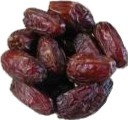 |
One cup of pitted, chopped dates contains 3.6 grams of protein, 415 calories and 11.8 grams of dietary fiber. | Potassium - 964 mg
Phosphorus - 91 mg Magnesium - 63 mg Calcium - 57 mg Sodium - 3 mg Iron - 1.5 mg Selenium 4.4 mcg Manganese - 0.385 mg Copper - 0.303 mg Zinc - 0.43 mg Also contains small amounts of other minerals. |
Vitamin A - 15 IU
Vitamin B1 (thiamine) - 0.076 mg Vitamin B2 (riboflavin) - 0.097 mg Niacin - 1.873 mg Folate - 28 mcg Pantothenic Acid - 0.866 mg Vitamin B6 - 0.243 mg Vitamin C - 0.6 mg Vitamin E - 0.07 mg Vitamin K - 4 mcg Contains some other vitamins in small amounts. |
Raisins
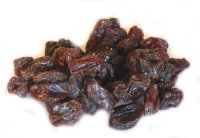 |
One small box of raisins (1.5 ozs) contains 1.32 grams of protein, 129 calories and 1.6 grams dietary fiber. | Potassium - 322 mg
Phosphorus - 43 mg Magnesium - 14 mg Calcium - 22 mg Sodium - 5 mg Iron - 0.81 mg Selenium 0.3 mcg Manganese - 0.129 mg Copper - 0.137 mg Zinc - 0.09 mg Also contains small amounts of other minerals. |
Vitamin B1 (thiamine) - 0.046 mg
Vitamin B2 (riboflavin) - 0.054 mg Niacin - 0.329 mg Folate - 2 mcg Pantothenic Acid - 0.041 mg Vitamin B6 - 0.075 mg Vitamin C - 1 mg Vitamin E - 0.05 mg Vitamin K - 1.5 mcg Contains some other vitamins in small amounts. |
Grapes
 |
One cup of grapes contains 1.09 gram of protein, 104 calories and 1.4 grams of dietary fiber. | Potassium - 288 mg
Phosphorus - 30 mg Magnesium - 11 mg Calcium - 15 mg Sodium - 3 mg Iron - 0.54 mg Selenium 0.2 mcg Manganese - 0.107 mg Copper - 0.192 mg Zinc - 0.11 mg Also contains small amounts of other minerals. |
Vitamin A - 100 IU
Vitamin B1 (thiamine) - 0.104 mg Vitamin B2 (riboflavin) - 0.106 mg Niacin - 0.284 mg Folate - 3 mcg Pantothenic Acid - 0.076 mg Vitamin B6 - 0.13 mg Vitamin C - 16.3 mg Vitamin E - 0.29 mg Vitamin K - 22 mcg Contains some other vitamins in small amounts. (http://www.health-alternatives.com/fruit-nutrition-chart.html) |